

Language has always fascinated me; it reveals a lot about the person who is using it – what sort of words one chooses, what tone one uses, and in what context. Even for a person like me, a nobody, it matters. I think a lot about what word to use. If I use this word, how would I sound, or more accurately how will I be translated, perceived by others. It is within this context that I want to return to some of the language that has been used in the last few days by people who matter. Wartime language can sometimes be careless, emotions run high and words slip out, but leaders who run the show should be careful with that.
I analyze this language within the premise that the United States set out to start this war – not Israel (what else can you expect from Benjamin Netanyahu). After all he has been for decades now using some of the most abhorrent language against Arabs, Muslims and Iranians, at least in his Hebrew speeches.
Let us go back for a moment to December 2025, when Iranians were protesting on the streets of Tehran and elsewhere, and Donald J. Trump – the Supreme Leader of the United States – wrote on social media that “Help is on its way.” The suggestion was quite clear: the people of Iran needed help, and the United States was ready to provide it. It was presented almost as a moral cause, a noble undertaking – getting rid of the evil people in Iran who had, in Trump’s words, “for decades committed horrible crimes against the Iranian people.” What a noble thing to do, one might have thought – the United States stepping in to rescue ordinary Iranians from their rulers. And of course there is always that familiar story quietly in the background — the White Man’s burden, though in this case perhaps the orange man’s burden – the responsibility to step in and save poor Iranians from themselves.
Fast forward two months.
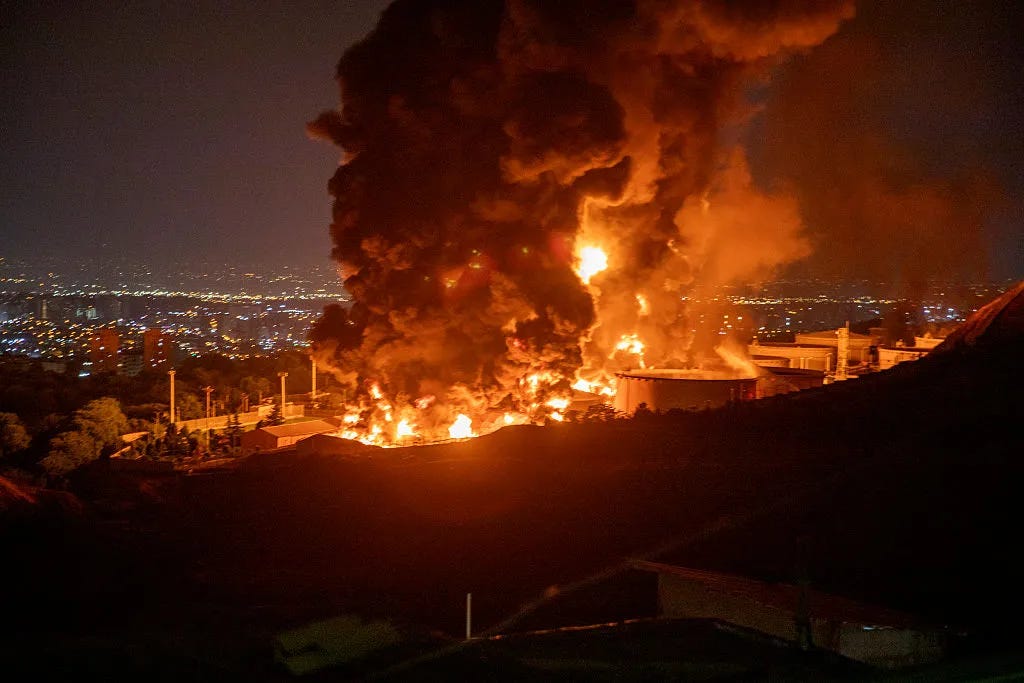
The United States, in collaboration with Israel, attacked Iran indiscriminately using Tomahawk missiles and aerial bombs that do not differentiate between military and civilian targets, killing hundreds of people – women, children, paramedics and ordinary civilians. The very people that the Supreme Leader of the United States had two months earlier promised to help.
Why am I talking about this? The idea is simply to give a brief background before returning to the question I set out in the beginning – language.
Among many other things that Trump has said in the last few days, I want to take you to March 10, 2026. While speaking to Republican lawmakers in Florida he described the Israeli-US military strikes against Iran as a “short-term excursion” and even a “little excursion.”
The Oxford English Dictionary defines excursion as “a short journey made for pleasure, especially one that has been organized for a group of people,” or “a short period of trying a new or different activity.”
Two words here stand out – pleasure and activity – and they are the operative words in this definition.
Pleasure suggests enjoyment, satisfaction, something one derives happiness from. Activity suggests an undertaking, a task, something one simply does. When the bombing of a country begins to appear in the language of pleasure and activity, something important has already happened in the imagination. War begins to sound less like violence and more like an undertaking, a temporary outing, almost a recreational act. And the people who are killed in that undertaking slowly disappear from the imagination.
If killing hundreds of Iranians can be described as an excursion – an activity that produces pleasure – then one might begin to question the claim that Trump was somehow pushed into this war by Benjamin Netanyahu, something earlier American presidents had largely avoided. It would seem far more likely that he walked into it willingly. After all he believes in the same biblical imagination that many of his allies do – his ambassador to Israel, his colleague and friend Lindsey Graham, and Senator Ted Cruz – the idea that protecting Israel is not merely geopolitics but something close to a religious duty.
More importantly, there is another language that appears in Benjamin Netanyahu’s speeches – the biblical reference to Amalek. In the Hebrew Bible Amalek is not merely an enemy tribe. The command associated with Amalek is to remember what they did and ultimately to blot them out completely. In other words, Amalek represents the enemy whose destruction is imagined as total. When this reference appears in contemporary political speech, it carries that memory with it. The enemy in this language is not someone to be negotiated with, or even simply defeated in battle. The enemy is someone who must disappear. If Muslims and Arabs are placed within that imagination – as Netanyahu’s rhetoric has suggested – then violence against them begins to appear not merely as war but as something closer to a sacred obligation. And if they can be killed like cattle, then perhaps war itself begins to look exciting – an adrenaline rush, a spectacle, something that produces pleasure of its own. War pornography.
Trump is not alone in this language. His Secretary of War – a man who seems to take great pride in calling himself that – has used language that is equally revealing. In his press conferences he has referred to Iranians as “rats.” This is an old technique of war. Before people are killed, they are first turned into something else – animals, creatures that need extermination. Rats are not people. They are pests. Such language dehumanizes people before the bombs begin to fall.
More recently Trump said this in a social media post:
“Watch what happens to these deranged scumbags today. They’ve been killing innocent people all over the world for 47 years, and now I, as the 47th President of the United States of America, am killing them.”
Pause for a moment and look at this language.
What does it mean to call someone a deranged scumbag?
The word deranged suggests madness – someone irrational, beyond reason, someone with whom dialogue is pointless. But scumbag does something else. It does not simply insult. It degrades. A scumbag is something filthy, something beneath dignity, something that provokes disgust rather than empathy.
Put the two together and the transformation is complete. The enemy is no longer human. He is mad and filthy at the same time. Once that transformation happens, killing him no longer appears morally troubling. It begins to look justified, even necessary.
And then there is the claim attached to this language – that these people have been killing innocent people around the world for 47 years.
Perhaps that claim also deserves a pause.
Over the past several decades the United States has fought wars in Vietnam, Iraq, Afghanistan and elsewhere that together have taken millions of lives. Even the post-9/11 wars alone have caused close to a million deaths, including hundreds of thousands of civilians. These numbers do not even include those who died later because hospitals collapsed, infrastructure was destroyed, or entire societies were displaced.
Whether one takes pride in this war, or pleasure, or simply looks away, one thing seems clear: the United States never really cared about the Iranian people. It was a beautiful fiction sold to Iranians and to the rest of the world. But language reveals more than its speakers sometimes intend.
When Netanyahu invokes Amalek, it does not refer only to Muslims or Arabs. In its biblical sense Amalek can mean anyone who stands outside the chosen community. Today it may be one group. Tomorrow it may be another. In other words, Trump, Hegseth and the other cheerleaders of the Israeli regime today may one day discover that they too belong to the category of Amalek. History has shown many times that the language used to destroy others eventually circles back.