

I recently read Owen Jones’s Substack response to Mike Huckabee’s February 2026 interview with Tucker Carlson, and I agreed with much of his argument. He shows how religious language can enter foreign policy talk and make very extreme ideas sound normal and respectable. The interview spread quickly online and drew strong condemnation from Arab and Muslim nations. Still, the moment felt less about one ambassador and more about how familiar this rhetoric already feels in American politics. Statements that should shock us often pass with little reaction. The problem seems larger than one interview or one person and is tied to the wider environment where these ideas keep appearing and circulating.
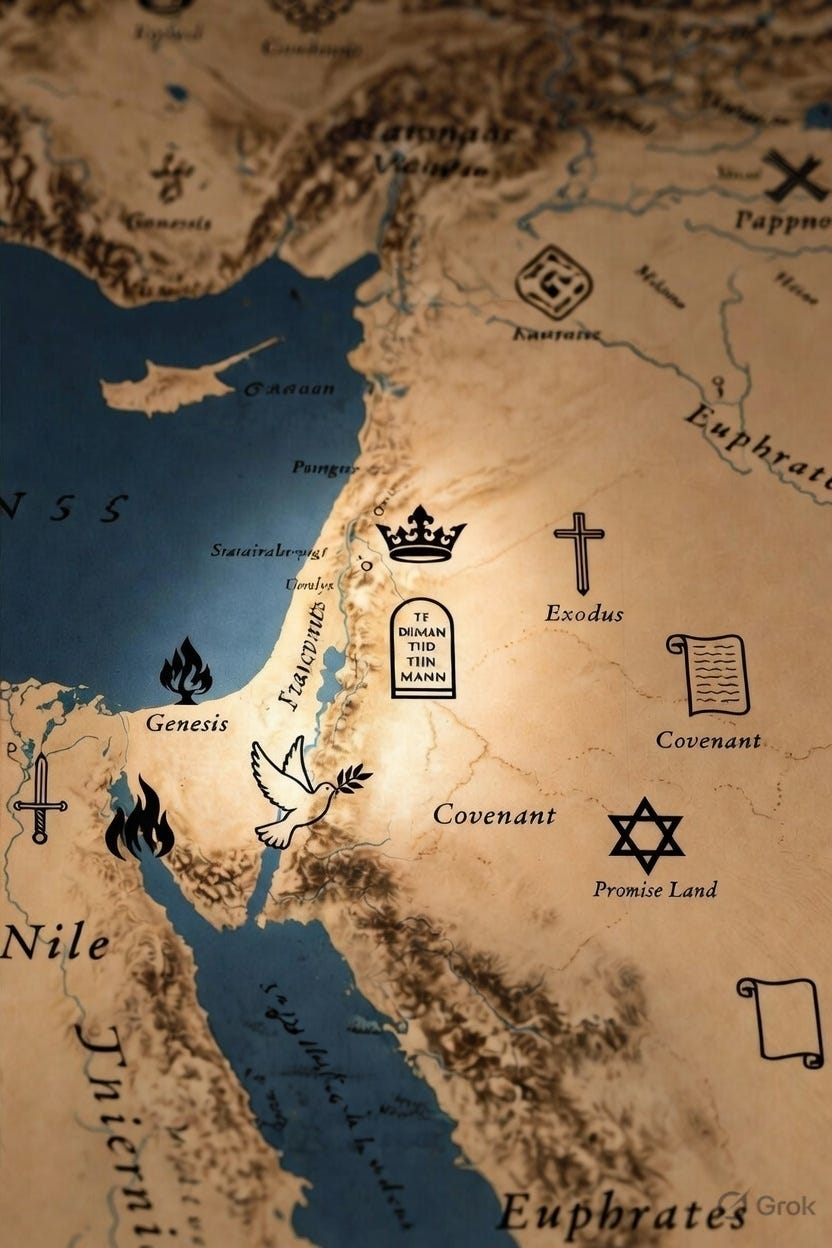
Huckabee is not some lone fringe voice. Political figures such as Ted Cruz, Mike Pence, and Nikki Haley have also used biblical language when talking about Israel. They often frame support in terms of divine promise or covenant, and these are people who have held or sought the highest offices in the United States. When leaders at this level use scripture to discuss borders, sovereignty, or military conflict, it cannot be treated as a minor rhetorical issue. It becomes part of mainstream political debate. This was clear when Huckabee responded to Tucker Carlson’s reference to Genesis 15:18 and the land ‘from the Nile to the Euphrates.’ When asked if Israel had a divine right to that territory, he said ‘it would be fine if they took it all,’ while adding that Israel is focused on defending its current land. Such caution does not remove the fact that expansive biblical claims are being normalized at an ambassadorial level, especially given the diplomatic backlash that followed the interview. It is easy to explain this only through voter incentives since white evangelical Christians remain a large and reliable voting bloc. Yet this explanation is incomplete. Many of these leaders have long public records shaped by evangelical Christianity, and their language often sounds like genuine conviction. Belief and political strategy seem to reinforce each other, and it would be naive to assume that faith plays no real role.
This does not mean most Americans support extreme territorial expansion or endless conflict. Public opinion has shifted in recent years and has become more divided. A February 2026 Gallup poll shows that for the first time in more than twenty five years more Americans sympathize with Palestinians than Israelis, and many people express doubts about unconditional support and feel tired of long wars after Iraq and Afghanistan. Yet politics does not always follow average opinion because highly motivated groups often have a louder voice than passive majorities. When an issue is treated as sacred it becomes harder to question without political risk. This helps explain why statements that sound shocking to some can pass with limited reaction in a political environment where religious language already feels familiar.
Conversations outside the region often present Israel as a single unified voice, which oversimplifies reality. Israeli society is far more complex than it is often shown. Far right politicians who openly support annexation or permanent control over Palestinian territories are real and influential, and their statements travel widely in international media. Yet polling inside Israel shows a mixed and often pessimistic picture. Support for a two state solution among Jewish Israelis is relatively low and many people doubt that lasting peace is likely, while full annexation mainly appeals to right wing voters rather than a clear majority. At the same time many citizens still support diplomatic agreements, regional cooperation, or security arrangements that stop short of full annexation. This internal debate matters because it reminds us that the loudest voices are not the only voices, even if they travel the furthest and receive the most attention.
The Huckabee interview also raised concerns about whether strong American support for Israel could pull the United States toward a wider conflict with Iran. Huckabee repeated the idea that Israel’s enemies are America’s enemies. This language echoes a long civilizational story in which Middle Eastern conflicts are framed as part of an ongoing religious struggle. When foreign policy is placed inside that story it begins to feel like a moral duty rather than a strategic choice. History shows how powerful this shift can be. Christian Europe once persecuted Jews through expulsions and violence, while many evangelicals in the United States today see Israel as central to biblical prophecy and a key ally in an end times narrative. When theology overlaps with national security, the line between faith and policy becomes harder to see and more difficult to question.
History makes this shift striking. Christian Europeans once persecuted Jews through expulsions and violence. Today many evangelicals in the United States and Christians in Europe see Israel as central to biblical prophecy and future expectation. This support places Israel inside a larger sacred story, and when that story overlaps with national security arguments the boundary between faith and policy becomes harder to see.
The problem becomes sharper when scripture is used to justify territorial claims. Saying that a land belongs forever to a specific people because of divine promise assumes we can clearly identify that people and interpret ancient texts for modern politics with certainty. The idea of a chosen people becomes complicated because Judaism, Christianity, and Islam all trace their origins to Abraham and understand inheritance in different ways. If descent from Abraham becomes a basis for political legitimacy, then the question of who decides becomes unavoidable. Religious identity is shaped by faith, culture, and interpretation, not simple lineage. When politicians use these ideas to defend borders, personal belief moves into state power. The modern international system is meant to rest on law, citizenship, and equal rights rather than divine selection. If land is framed as a sacred entitlement, compromise becomes extremely difficult because a divine promise is seen as beyond negotiation.
All of this unfolds amid fears of a possible conflict between the United States and Iran, a direction Israeli Prime Minister Benjamin Netanyahu has long encouraged Washington to consider. American society still carries deep war fatigue after Iraq and Afghanistan, and many people worry about the cost and uncertainty of new wars. Yet reluctance can shift when security concerns are mixed with religious language, which can make confrontation feel inevitable or morally required. Huckabee’s claim that Israel’s enemies are America’s enemies shows how quickly this framing can move from belief into policy at a moment when escalation could carry serious consequences for both American interests and regional stability.
In modern US i would assume that much of the intersection between theology and broader geopolitics especially "grand war" was amplified by Bush with his "crusade" remarks. This has taken a whole new shape under trump and the new right today.
BTW excellent article, timely one that too.