

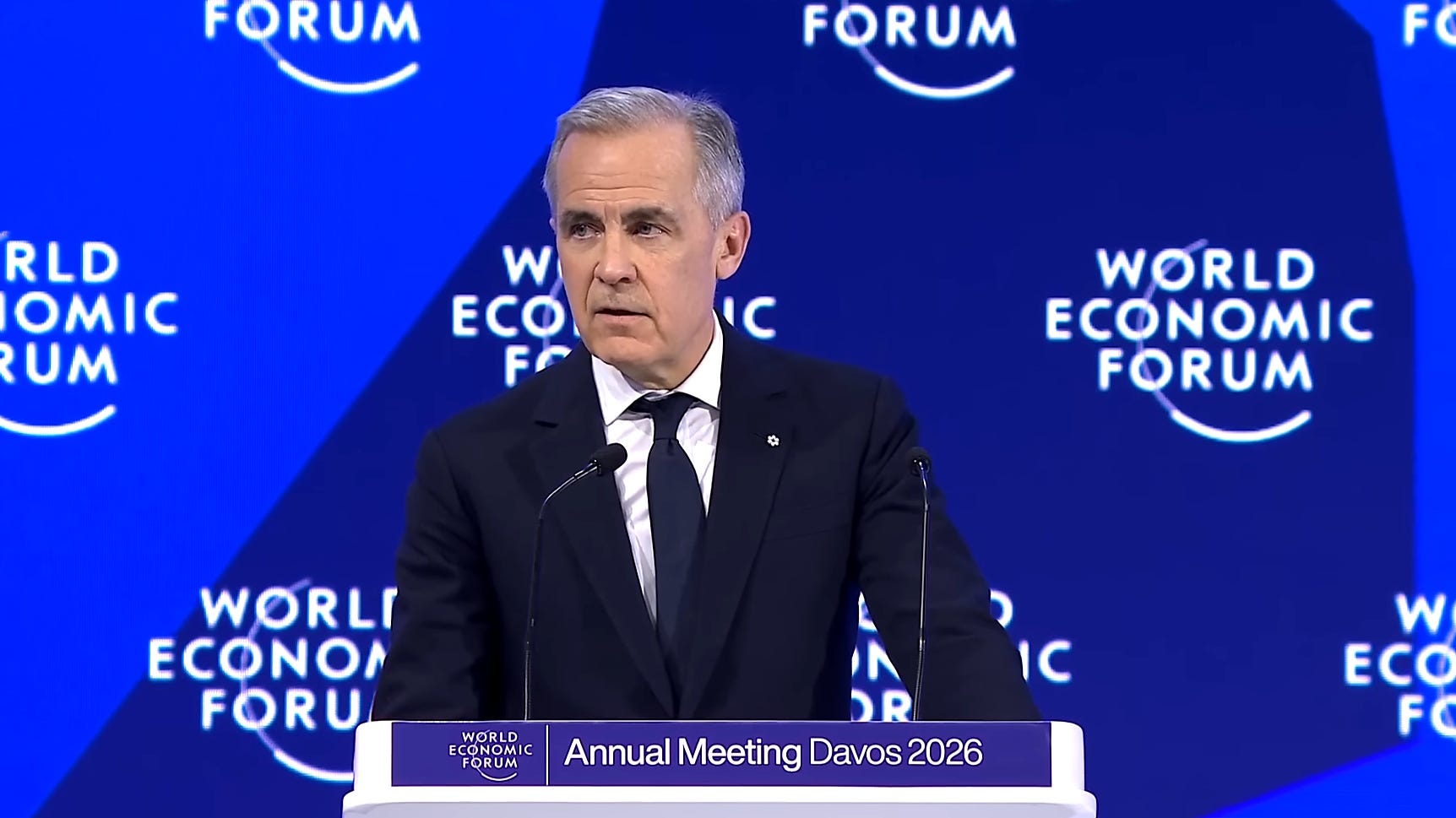
While I’m aware that this post is a little late but I believe it is necessary for me to write on. When I first listened to Mark Carney speak at Davos, a place where the world’s richest decide about the rest of us, I did not know what exactly I felt. I was not excited, but I was not dismissive either. The next morning, I asked my students to listen to the speech and we ended up talking about it, even though it wasn’t part of the lesson. I remember telling them I was unsure how to read it. At moments the speech sounded bold and honest. But at other moments I kept asking myself: what is actually new here? How should we read this moment?
This is the question I want to raise.
If the so-called rules-based international order was always fragile, always selective, always unequal, then what exactly are we supposed to do with this “new” realization? Is it a real turning point, or simply a late acknowledgement of something the Global South has been saying for a very long time?
I want to think through this question step by step.
First, was this order ever truly neutral?
For many people in the Global South, the idea of a fair and universal system has always felt distant. We grew up hearing about free markets, multilateral cooperation, and human rights. Yet our experience with these institutions has always felt distant. Markets have largely been shaped to favor the West. Western interventions in the Global South have often been selective – driven by their own interests. And economic reforms have repeatedly been imposed on countries that fall outside what Carney would consider part of the core. So, when Carney described the old order as a “pleasant fiction,” I could not help thinking that for many societies it was never pleasant in the first place. It was simply reality.
Second, why does this realization come now?
This is the part that drew me in the most. For years, leaders and scholars from Asia, Africa and Latin America spoke about the risks of dependence on powerful countries and institutions. Often these warnings were dismissed as ideological or exaggerated. Now, as geopolitical tensions rise and even Western allies face pressure and uncertainty, the language has suddenly changed. It creates an uncomfortable feeling: the crisis appears real only when it reaches the Global North.
Third, who belongs in this new idea of “middle powers”?
Carney speaks about coalitions of like-minded countries. At first this sounds inclusive. But it also raises doubts. Which countries are imagined in this group? Are countries from the Global South partners in shaping the agenda, or are they expected to support a project designed elsewhere? This question matters because inclusion is not just about invitation. It is about authorship.
Fourth, what kind of realism are we really talking about?
If the world is entering a period of self-reliance and strategic competition, then the conversation cannot stop at security and trade. Issues such as climate, finance, debt, and representation in global institutions are central for many developing countries. Without addressing these material realities, any new framework risks sounding familiar.
Finally, what kind of future is actually being imagined?
For many countries in the Global South, the goal is not to repair the previous order. It is to move toward a more multipolar world, where rules are negotiated more equally and development paths are less constrained by geopolitical alignment.
So, my uncertainty about how to read this moment remains. The speech felt important. It felt like a step, but a step is not a destination. And the real question is whether this moment will lead to genuine change or simply a new language for old structures