

Turning and turning in the widening gyre
The falcon cannot hear the falconer;
Things fall apart; the centre cannot hold;
Mere anarchy is loosed upon the world...
—W.B. Yeats, "The Second Coming" (1919)
Yeats wrote those lines in early 1919, right after World War I had left Europe in ruins and the Irish War of Independence was breaking out. The old order was collapsing and chaos felt inevitable.
The same feeling grips the Gulf today. At a time when the Middle East is facing a litmus test of sorts – which direction it wants to go – Bahrain presented and introduced a draft resolution on behalf of the Gulf Cooperation Council (GCC) member states, along with Jordan, in the UN Security Council. The truth is, let me state it as clearly as I can: the GCC countries find themselves at a crossroads where they cannot decide what direction to take.
From where I sit, it appears they have two main choices – and I’m not sure whether they even want to make that call or not:
a) They can go beyond diplomatic condemnations and join the war alongside Israel and the United States – and while I’m writing this, I can’t fathom the idea of them fighting alongside Israel. Not that it’s impossible, but it’s difficult and they know it.
b) They can continue to remain enraged, issue condemnations and do nothing more than that.
They do have a third choice, though: put pressure on the United States to stop attacking Iran and perhaps that is what Iran’s game is.
I want to try to answer these three questions one by one in this essay.
Let us take the first proposition: that the GCC joins the war and starts bombing Iran alongside its allies, Israel and the US, who have been bombing Iran since February 28, 2026. I want to look at this question from two different perspectives –one from the Iranian side and the other from the streets of the Middle East.
From an Iranian perspective, it makes little or no difference to Iran if these countries join the war. After all, what are they going to bring to the table that the United States and Israel are lacking? They can bomb, but what difference does it make? The US and Israel are doing that already – what difference do a few thousand more bombs make when the place is already being bombed a thousand times a day? Iran seems to have calculated this risk and come to the conclusion that they are ready for all contingencies.
But let us flip that idea: if they do join the war, what does it mean for the Arab streets? There is growing anger in the Arab streets that their governments have not done anything for the Palestinian people – in fact, many think their governments are colluding with Israel, and that anger is simmering in the streets. The governments in these countries are mostly monarchies – dictatorships – and the anger on the streets can directly affect them. Some analysts believe it would end their rule in these countries – it would be regime change, but not the one the United States had expected.
And honestly, joining actively looks pretty unlikely anyway. The Abraham Accords normalization was always more about economic deals, trade, tech, and some shared security – not turning into a full-blown military alliance bombing Iran together. It was never sold as “let’s team up to fight Tehran head-on” and if the GCC suddenly starts dropping bombs alongside Israel, the public backlash would be massive – way beyond what they’ve already got simmering. These governments know that crossing that line could blow up in their faces fast.
Now let us look at the second option: these countries will keep issuing condemnations and nothing more than that. By all means, this looks like the possible direction they would want to continue. They are aware that they cannot anger their population any more than they already have, but that begs a difficult question: can they withstand daily attacks from Iran and the humiliation it brings? The Gulf dream is based on the idea of peace and security – an idea that most of these countries have successfully sold to the rest of the world for years now. Iran is puncturing that bubble, and the United States, which has de facto been the guarantor of that security, has betrayed the GCC in their hour of need.
This is exactly where the Bahrain resolution comes in – it’s classic symbolic posturing. They push a strong condemnation through the UN, and get it passed with big co-sponsorship, but there’s zero real enforcement to these resolutions. True, It lets them look tough on paper, preserve that shiny “peace and security” brand for investors and the world, while quietly still relying on US protection.
Perhaps these countries – or at least conversations in these countries – have shifted in the way they look at the United States. They have understood that Israel means a lot more to the United States, and these countries are just convenient investments that can be discarded anytime like a bad business. Make no mistake: these countries have themselves understood that in this war, but they have put their foot where it shouldn’t have been and now find themselves in a difficult position.
The third option these countries have is to tell the United States that it is time for them to leave the Middle East for good. But do they have the courage to irritate a madman in the White House – who thus far has shown no signs of stability when it comes to war and peace? Look at how Trump has flip-flopped on this Iran mess already – he promises quick wins one day, then threatens “twenty times harder” strikes the next. He has made it clear that he has no clear endgame. What is more surprising is that not only Trump, but the White House also has no idea how this war is going to end. In a recent question to press secretary Karoline Leavitt asking for the reason Trump joined the war, she seemed to suggest that the president had a feeling that Iran was going to attack the US. Wars are not fought on feelings – if this is the lunacy we are dealing with, then god help us.
Finally, GCC countries have been trying to diversify anyway – in the recent past they have shown interest in doing trade with China, they have also shown their interest in BRICS – basically, they do not want to be stuck with Washington only. But let’s be real: US bases are all over the Gulf and the security pacts run deep, therefore a full break would be a risky move. Yes, pressuring the US to exit sounds good on paper, but pulling it off without getting burned is a different story.
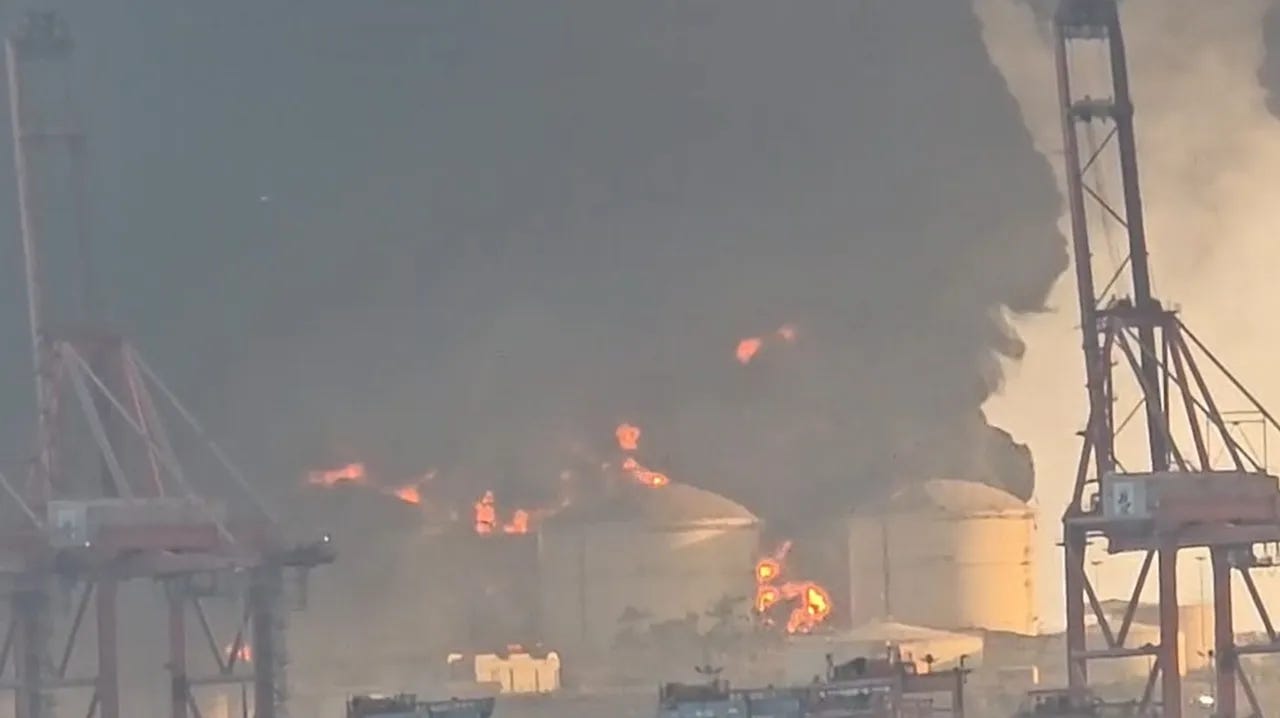
Iran is aware that this game will go on and they can ignore these resolutions as long as the war is ongoing – after all, Israel has ignored numerous such resolutions in the past three years. Iran, on the other hand, will try to use plausible deniability on some of the attacks that it carries out in the GCC countries, such as the ones we saw in Oman yesterday – a drone strike that hit Salalah port oil facilities and set fuel tanks ablaze.